Marina Del Rey sits on reclaimed marshland near the harbor, so water extraction jobs often involve tracking moisture that travels under slab foundations common in 1960s and 1970s homes in Oxford Triangle and Silver Strand. Salt air accelerates corrosion on metal ductwork and electrical boxes once water sits for more than a day, requiring crews to pull baseboards early and check for hidden saturation behind lath-and-plaster walls. Mild Mediterranean winters still bring sudden downpours that overwhelm the aging storm drains along Admiralty Way, sending water into garages and lower-level units faster than inland neighborhoods experience.
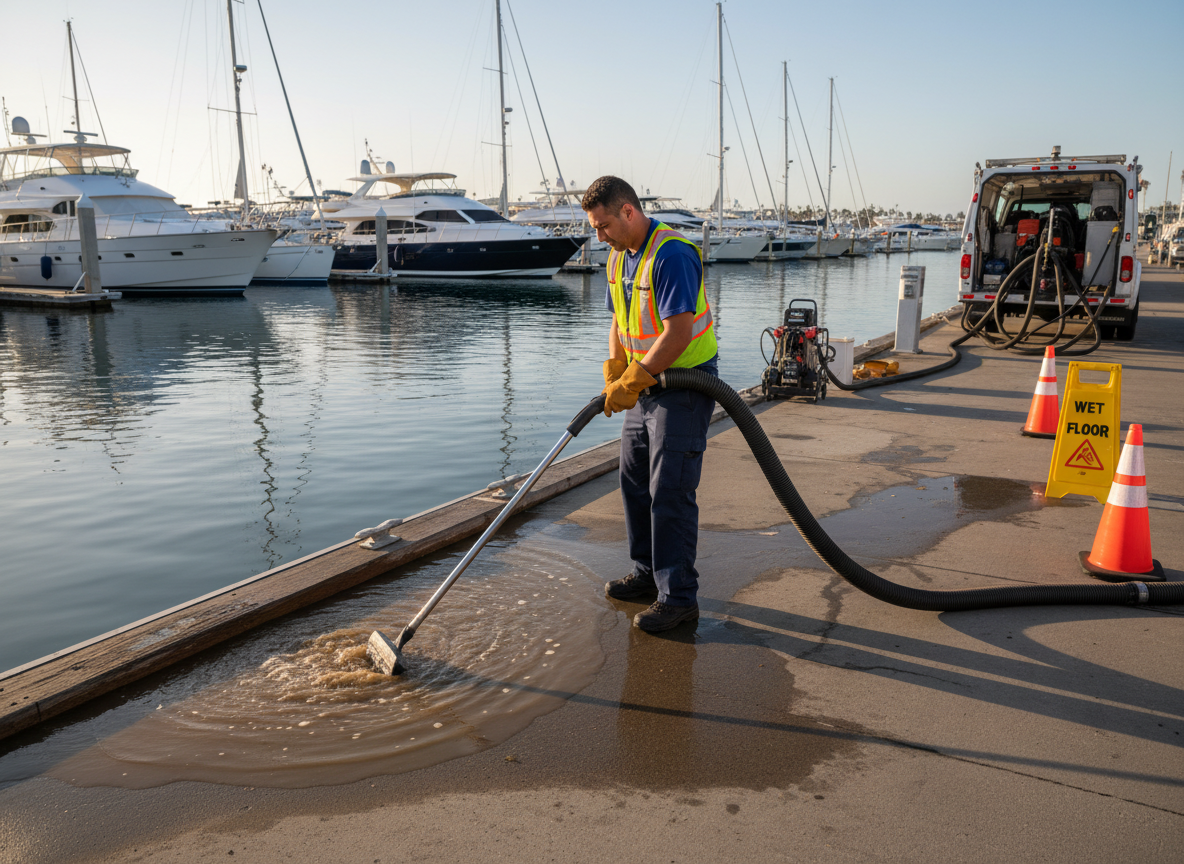
Extraction equipment must account for the high water table and sandy soil that lets water migrate laterally toward Fisherman's Village and Burton Chace Park properties. Technicians frequently use subfloor drying mats on pier-and-beam homes because trapped moisture under tongue-and-groove flooring leads to cupping within forty-eight hours in the area's consistent humidity. Commercial spaces at Mother's Beach marinas add another layer: bilge and dock-adjacent storage rooms often require specialized pumps rated for brackish water to avoid damaging boat lifts and electrical systems.
Los Angeles County building codes require permits for any structural drying that affects load-bearing elements, so extraction plans near the harbor routinely include documentation for inspectors before walls are opened. Crews based at 4375 Glencoe Ave keep truck-mounted units ready for after-hours calls when residents in Playa Vista or Culver City report sudden main-line backups that travel east into Marina del Rey streets.
Technician insight
In Marina Del Rey the thing that catches most people out with water extraction is how quickly harbor moisture travels under the slab in 1960s homes once the water table rises after a winter storm; if you only pull the carpet you will still have cupping floors two weeks later.
Oxford Triangle Garage Flood
A sudden rain overwhelmed the storm drain on Oxford Avenue and sent water under the garage slab of a 1972 home. We extracted standing water, then discovered saturation had wicked into the adjacent laundry room drywall. Air movers and dehumidifiers ran for four days until readings matched unaffected sections, preventing mold growth before the owners returned from travel.
How it works
- 1
Initial Assessment
Technician arrives within the hour, maps water migration using moisture meters, and identifies affected zones in harbor-adjacent homes.
- 2
Water Removal
Truck-mounted pumps and portable extractors pull standing water from slabs, carpets, and subfloors while protecting nearby electrical panels.
- 3
Targeted Drying
Air movers and dehumidifiers are placed to address hidden moisture in walls and under flooring typical of older Marina Del Rey construction.
- 4
Final Verification
Readings are rechecked and documented before equipment is removed, ensuring no residual dampness remains near the harbor's saline environment.
Pricing
Cost depends on water volume, access to subfloor areas, and whether salt-water intrusion requires extra equipment.