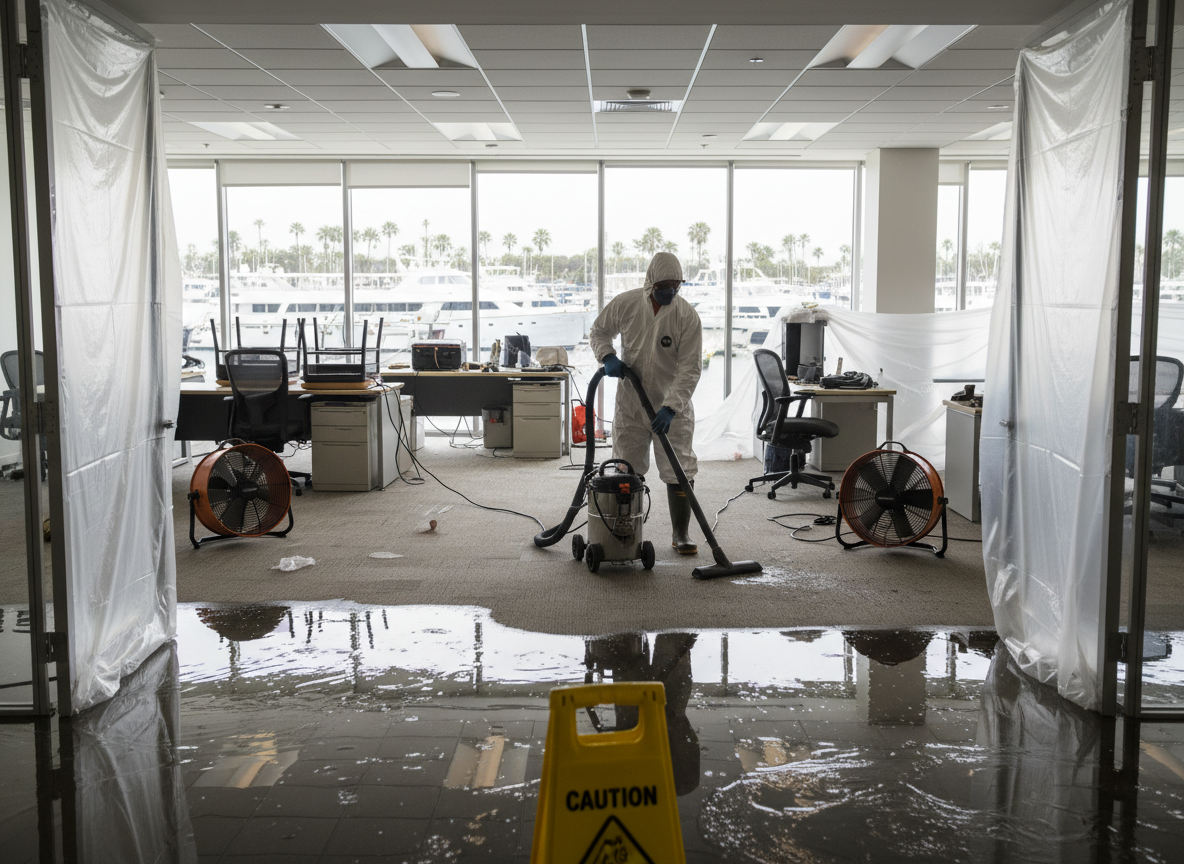
Emergency water cleanup in Marina Del Rey often starts with properties near the harbor where even small leaks travel quickly through multi-unit buildings common in Silver Strand and Oxford Triangle. Coastal humidity keeps moisture trapped longer in older wood framing and underfloor cavities, requiring more aggressive air movement and monitoring than jobs further inland. Technicians dispatched from the Glencoe Ave location carry portable extractors and moisture meters suited to the dense layout of condos and townhomes that back up to the water.
Salt air from the Marina del Rey Harbor accelerates corrosion on metal fixtures and electrical boxes once water reaches them, so crews isolate power and check for hidden pockets behind kitchen cabinets or in bathroom walls before drying begins. In the mild Mediterranean climate, overnight dew can re-wet surfaces if dehumidifiers are removed too soon, especially in units facing Mother's Beach or Burton Chace Park where airflow is blocked by neighboring structures. Documentation of affected materials helps owners coordinate with Los Angeles County building requirements when repairs cross into common areas.
Water that reaches carpet padding or engineered flooring in Fisherman's Village area rentals demands immediate removal to limit swelling and odor. Crews often cut small inspection openings in drywall rather than relying on surface readings alone, because the layered construction in 1970s and 1980s buildings hides moisture paths that later produce musty smells. Continuous logging of humidity levels inside the structure prevents callbacks that occur when residents reopen windows to the sea breeze too early.
Technician insight
In Marina Del Rey, the thing that catches most people out with Emergency water cleanup is how the constant harbor humidity and older multi-unit construction in Oxford Triangle keep moisture trapped behind shared walls, so a job that looks finished on day two often needs two extra days of dehumidification before we can safely leave.
Overflow from upstairs unit near Burton Chace Park
Water from a second-floor bathroom reached the lower unit through shared plumbing chases in a Silver Strand condo. Extraction focused on the subfloor and base of the party wall. Equipment ran for four days until readings matched the unaffected side of the building, and the owner avoided mold growth that commonly appears in these coastal units when drying is cut short.
How it works
- 1
Arrival and Safety Shutoff
Technician reaches the property from the Glencoe Ave base, shuts off water if still flowing, and secures electrical hazards before mapping the spread.
- 2
Water Extraction
Standing water is removed with truck-mounted or portable pumps, followed by wand extraction on carpets and pads in rooms bordering the harbor.
- 3
Drying and Monitoring
Air movers and dehumidifiers are placed, with daily moisture readings logged until levels match unaffected areas in the same building.
- 4
Final Assessment
All equipment is removed only after readings confirm safe conditions, and the site is left ready for any needed repairs by the owner.
Pricing
Upfront pricing is given after inspection; cost varies with volume of water, materials affected, and number of days drying equipment must remain on site.