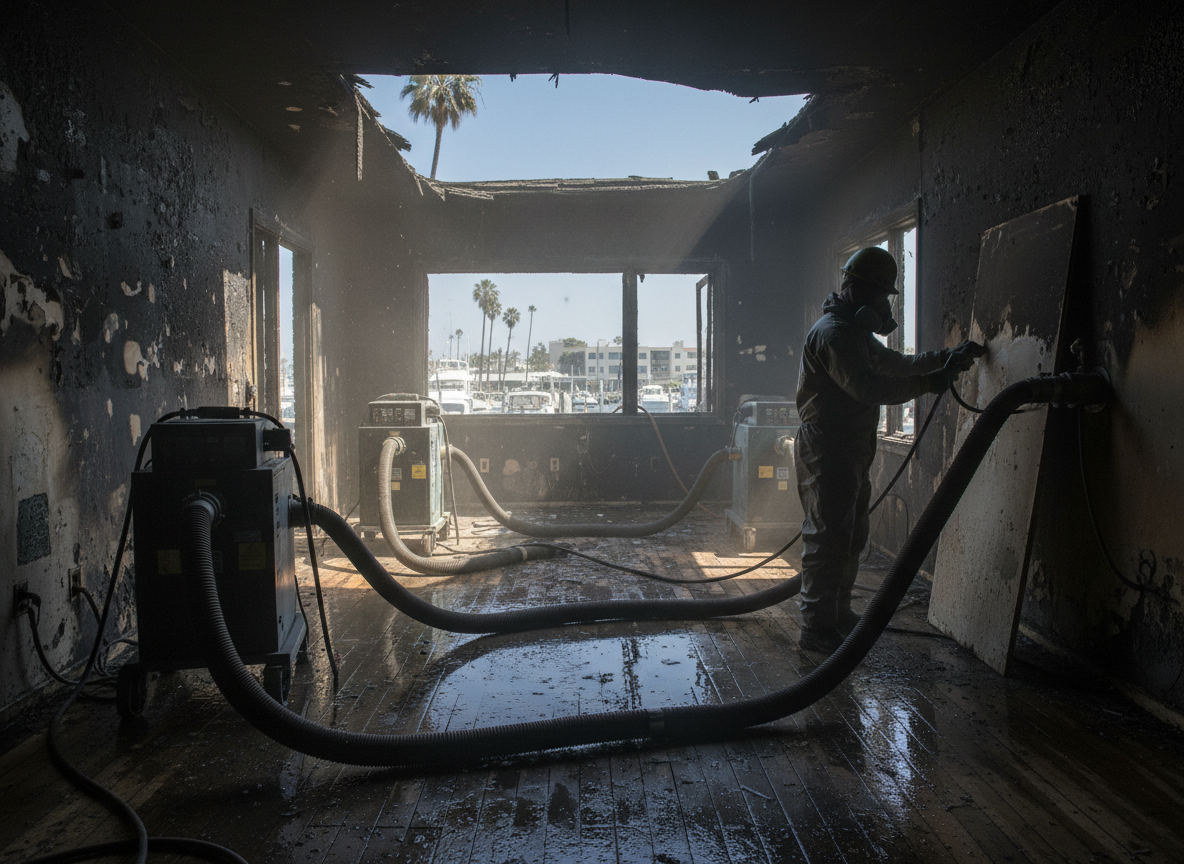
Fire suppression water in Marina Del Rey often saturates older stucco and wood-frame homes in neighborhoods like Oxford Triangle and Silver Strand, where salt air from the harbor accelerates corrosion on metal framing and electrical components once moisture lingers. The mild coastal Mediterranean climate keeps outdoor temperatures moderate year-round, but high humidity near Mother's Beach and Burton Chace Park slows natural evaporation, allowing hidden pockets of water to remain in wall cavities and under flooring for weeks. Los Angeles County building codes require full documentation of moisture levels before any reconstruction, and failure to address soot mixed with salt can lead to ongoing odor issues in units close to Marina del Rey Harbor.
Technicians must separate water extraction from soot removal because pressure washing can drive particles deeper into porous materials common in Playa Vista-adjacent condos. Edge cases include multi-story buildings where water migrates downward through shared walls into neighboring units near Fisherman's Village, requiring coordination with multiple owners. Warning signs of incomplete drying include recurring musty smells in closets and HVAC returns, especially after winter rains increase indoor humidity. Proper protocol calls for targeted demolition only after infrared mapping confirms dry standards across all affected layers.
Ventilation strategies differ here because steady onshore breezes help exterior drying but can push humid air into open structures if dehumidifiers are not balanced correctly. Materials like drywall in 1970s-era buildings near Culver City absorb water quickly yet release it slowly, raising the risk of mold colonies forming before visible signs appear. Crews routinely check subflooring in ground-level units around the harbor for trapped water that standard fans miss, preventing callbacks that occur when owners reopen spaces too soon.
Technician insight
In Marina Del Rey, the thing that catches most people out with water damage remediation after fire is how salt air from the harbor combines with residual moisture in older stucco around Oxford Triangle and Silver Strand, turning minor damp spots into corrosion problems on wiring and framing within days if drying is rushed.
Suppression water in harbor-adjacent condo
A unit near Fisherman's Village took water through ceilings during a kitchen fire response. Mapping showed migration into shared walls and subflooring typical of 1980s buildings in the area. Extraction and balanced dehumidification addressed salt-accelerated risks, and verification confirmed dry standards before owners returned.
How it works
- 1
Initial Assessment
Technicians map moisture and soot extent using meters and infrared cameras in the specific Marina Del Rey property.
- 2
Water Extraction
Remove standing and trapped water from suppression efforts while protecting unaffected areas in coastal homes.
- 3
Drying and Dehumidification
Deploy equipment calibrated for local humidity levels near the harbor until readings meet Los Angeles County standards.
- 4
Soot and Odor Removal
Clean surfaces and treat air to address smoke residue combined with salt air exposure.
- 5
Final Verification
Document dry conditions and provide guidance for safe reentry before any reconstruction begins.
Pricing
Pricing varies by affected square footage, material types, and number of stories; upfront quotes provided after inspection.